Introduction
Your friend just sent a skull emoji. No words, just 💀. You pause and wonder what it means. Are they upset? Is it a joke?
The skull emoji confuses many people. Older users see death and danger. Younger users see laughter and fun. Context is everything.
This emoji is everywhere on TikTok, Instagram, and Snapchat. Gen Z made it a symbol for laughing hard, but it still carries old meanings like danger and Halloween spookiness.
The meaning of the skull emoji changes with the conversation, the platform, and who sends it. This guide breaks down every meaning.
What Does the Skull Emoji Mean?
The skull emoji mainly means extreme laughter. A 💀 after a funny message means the sender is dead from laughing so hard.
In a funny chat, it shows joy. In a serious chat, it can show shock, danger, or dread.
People use it for hilarious memes, joking about fails, teasing friends, Halloween posts, and pirate themes.
Examples:
- “That meme just killed me 💀”
- “I told my mom I was at the library but I was at the mall 💀”
- “This traffic is going to make me late again 💀”
Different Meanings of the Skull Emoji
General
In general use, the skull emoji means death, danger, or something extreme. It can be playful, like laughing to death, or serious, like marking something as deadly. In casual chats it usually leans playful.
Romantic
In romantic chats, the skull usually means playful embarrassment. Someone might send it after saying something cheesy. It softens the moment and shows they are laughing with you, not at you.
Friendly
Between friends, the skull is pure comedy. Friends send it to react to jokes, fails, and funny stories. It says “you are hilarious” without typing a full sentence.
Funny
The funny meaning is the most common one. It means “I am dying laughing” and works like a stronger version of the laughing emoji. People use it when normal laughing emojis feel too weak.
Sarcastic
Sarcastically, the skull means “I am so done” or “this is painfully awkward.” Someone might reply with it to a bad joke or a cringe moment, pretending to die from secondhand embarrassment.
Social Media
On social media, the skull appears in comments and captions. “POV: me explaining my sleep schedule” with a skull is a classic format. It adds humor and also shows up in Halloween content.
Text Message
In text messages, the skull often replaces words. A single skull after a story means “that is wild” or “I cannot believe that.” It saves typing and keeps the chat fast and fun.
Workplace
In the workplace, the skull is risky and can look unprofessional or dark. Avoid it in emails to your boss. Among close coworkers in a casual chat it can work for deadline jokes, but use it carefully.
When Should You Use the Skull Emoji?
- Hilarious moments: Send 💀 when a joke makes you laugh out loud.
- Own fails: “I studied the wrong chapter 💀” keeps it light.
- Teasing: Reply with a skull when a friend says something silly.
- Halloween: Use it in October captions for spooky vibes.
- Shock: “Did you see what happened in class 💀” shows disbelief.
Texting examples:
- “bro the teacher caught him sleeping in class 💀💀”
- “i just sent the text to the wrong person 💀 help”
What Does the Skull Emoji Mean from a Girl?
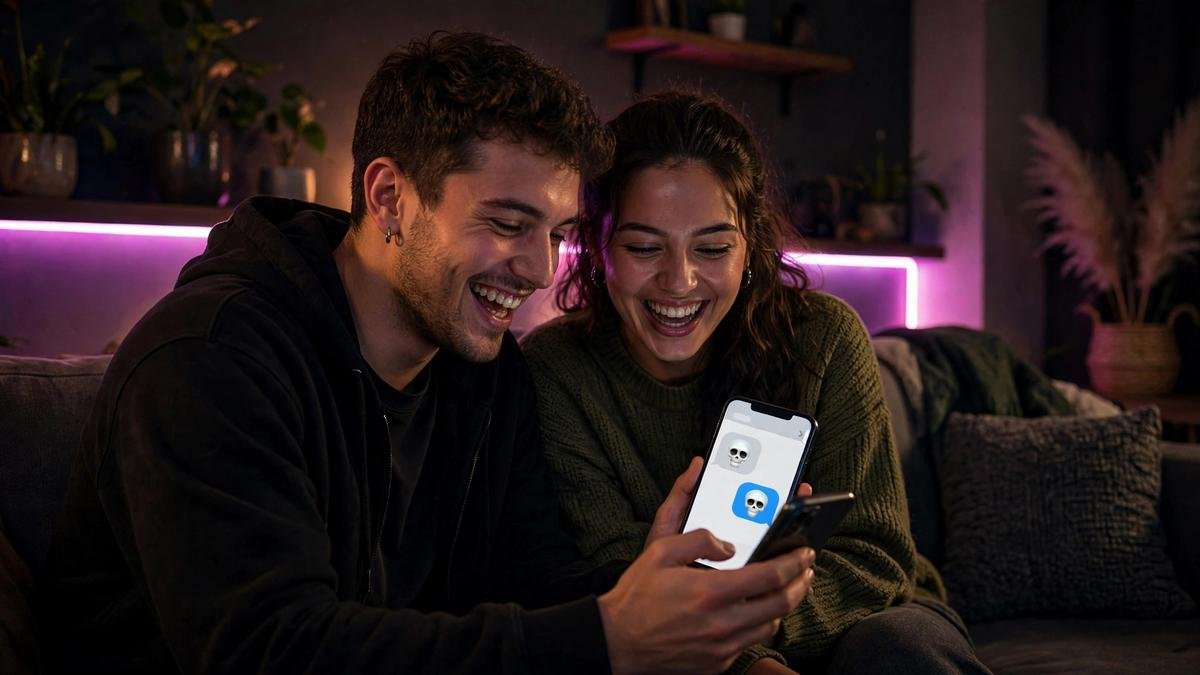
From a girl, the skull usually means she finds something funny or relatable. It is friendly and playful, not serious.
She might send it after something funny or her own embarrassing moment. It shows she is comfortable with you.
Examples:
- You: “I tripped in front of everyone at the mall”
- Her: “STOP 💀 that is so embarrassing”
What Does the Skull Emoji Mean from a Boy?
From a boy, the skull also means laughter or shock. Boys use it in gaming chats and banter. It often means “that is wild.”
He might send it after a funny fail or a wild story. In flirty chats, it can mean playful embarrassment.
Examples:
- You: “I missed the winning shot”
- Him: “no way 💀💀”
Skull Emoji on Snapchat
On Snapchat, the skull appears in streaks, story names, and photo captions. People add it to funny snaps to show laughter.
It is popular in Halloween stories. Users decorate spooky snaps with skulls and ghosts. In streaks, one skull keeps things funny.
Skull Emoji on WhatsApp
On WhatsApp, the skull shows up in group chats where friends react to funny messages. Older relatives may read it as a bad omen.
In family groups, grandparents may not know the laughing meaning. A quick explanation saves confusion.
Skull Emoji on Instagram
On Instagram, the skull appears in captions, comments, and bios. “💀💀💀” under a funny reel means dying of laughter.
In bios, it gives an edgy aesthetic. Paired with black hearts, it creates a moody look. Meme pages use it in nearly every caption.
Skull Emoji on TikTok
TikTok made the skull famous as the laughter emoji. Comments are full of skulls under funny videos.
Relatable captions with a skull get thousands of likes. It adds instant humor to funny or painfully true videos.
Skull Emoji Combinations
| Emoji Combination | Meaning |
|---|---|
| 💀😂 | Dying of laughter, the funniest reaction |
| 💀💀💀 | Triple skull, extreme laughter or shock |
| 💀⚰️ | RIP, something is completely over or dead |
| 💀👻 | Spooky vibes, Halloween fun |
| 💀🖤 | Dark aesthetic, edgy and moody |
| 💀🤡 | That was so cringe it killed me |
| 💀📱 | My phone died, or I saw something wild online |
| 💀☠️ | Double danger, extremely risky situation |
| 💀🎃 | Halloween season, spooky and fun |
| 💀💸 | My wallet is dead, spent too much money |
| 💀📚 | Studying killed me, exam stress humor |
| 💀🍕 | Ate way too much, food coma joke |
| 💀🏃 | That workout destroyed me |
| 💀😭 | Laughing and crying at the same time |
| 💀🔥 | That was fire but also killed me |
Copy and Paste Skull Emoji
💀 Copy
☠️ Copy
⚰️ Copy
🪦 Copy
👻 Copy
🎃 Copy
🦴 Copy
Similar Emojis
| Emoji | Name | Meaning | Difference |
|---|---|---|---|
| ☠️ | Skull and Crossbones | Danger, poison, pirates | More serious and warning-like, used for actual danger not laughter |
| ⚰️ | Coffin | Death, funerals, something over | More formal and somber, rarely used for jokes |
| 🪦 | Headstone | RIP, memorial, game over | Newer emoji, more literal about death than the skull |
| 👻 | Ghost | Spooky fun, Halloween, playfulness | Lighter and friendlier, more cute than dark |
| 🎃 | Jack-O-Lantern | Halloween, fall fun | Seasonal and cheerful, not used for laughter |
| 🤡 | Clown Face | Foolishness, cringe, creepy fun | About being silly or creepy, not about dying laughing |
| 😂 | Face with Tears of Joy | Classic laughter | The older laughter emoji that the skull replaced for Gen Z |
| 🤣 | Rolling on the Floor Laughing | Extreme laughter | Similar laughing use, but feels more millennial than the skull |
| 🖤 | Black Heart | Dark love, edginess | About mood and style, not humor or death |
| 🦴 | Bone | Dogs, fossils, Halloween decor | Literal bone object, no laughing meaning at all |
Emoji Appearance Across Platforms
Apple
Apple’s skull is a white 3D skull with dark eye sockets and a slightly cartoon look. It looks clean and a little cute.
Android
Google’s skull on Android looks similar but flatter, and reads clearly even at small sizes.
Samsung
Samsung’s skull has a slightly more realistic shape with shading. It looks a bit more serious than Apple’s version.
Windows
Windows uses a flat Fluent skull with bold outlines.
Facebook’s skull is flat and simple with soft shading. It looks friendly rather than scary.
WhatsApp uses Apple’s skull design on iPhone and its own rounded style on Android.
Fun Facts
- The skull emoji was approved in Unicode 6.0 in 2010, making it one of the older emojis.
- Gen Z turned it into a laughter emoji, replacing the crying laughing face for many young users.
- On TikTok, comments with only skull emojis are a top reaction to funny videos.
- The skull and crossbones is a separate emoji with a more serious danger meaning.
- Pirate flags with skulls date back to the 1700s, long before the emoji existed.
- The skull is one of the top emojis used during Halloween season every October.
- Some older users still read it as a death threat, causing family chat misunderstandings.
- A headstone emoji was added in 2021 as a companion to the skull.
Common Mistakes
Do not send the skull to older people who miss the laughing meaning. Your grandma may think something terrible happened. Explain the joke instead.
Never use it in serious or sad conversations. A skull after bad news looks cold and rude.
Do not overuse it. Ten skulls in every message lose their impact. Save it for truly funny moments.
Do not mix it up with the skull and crossbones, which means real danger. Keep it out of work chats.
Frequently Asked Questions
What does the 💀 emoji mean in texting?
In texting, the skull emoji most often means “I am dying of laughter.” It is Gen Z’s favorite reaction to something hilarious, stronger than the old laughing faces. It can also mean shock, embarrassment, or playful dread depending on the chat. In serious conversations it may still mean danger, so check the tone first.
Why do Gen Z use the skull emoji for laughing?
Gen Z adopted the skull for laughing because the crying laughing emoji started to feel outdated and cringe to them. Saying “I am dead” from laughter is common slang, and the skull became the visual version of that joke. It spread across TikTok and Twitter until it became the standard laughter reaction for young users everywhere.
What does 💀 mean from a girl?
From a girl, the skull emoji usually means she finds something funny, relatable, or playfully embarrassing. It is a friendly and casual reaction, not a serious one. She might send it after a joke, a funny story, or her own awkward moment. It rarely means anything negative and shows she is comfortable chatting with you.
What does 💀 mean on TikTok?
On TikTok, the skull emoji means extreme laughter or relatable shock. Comments full of skulls under a video mean viewers found it hilarious and could not stop laughing. Creators use it in captions to add humor to relatable situations. It is one of the most used emojis on the platform and signals funny content.
Is the skull emoji rude?
The skull emoji is not rude when used as a joke between friends who share the same humor. It becomes rude if sent after someone shares sad or serious news, since it can look like laughing at their pain. It is also risky at work or with older people who may read it literally. Context decides everything.
What is the difference between 💀 and ☠️?
The skull emoji is used for laughter, shock, and edgy humor in casual chats with friends. The skull and crossbones means real danger, poison, or warning, and comes from pirate flags and hazard symbols. They look similar but carry very different tones. Use the plain skull for jokes and the crossbones for actual danger.
Can I use the skull emoji on Halloween?
Yes, the skull emoji is perfect for Halloween posts and messages. It fits spooky captions, costume photos, and scary stories shared with friends. Pair it with ghosts, pumpkins, and bats for full Halloween vibes. It is one of the most used emojis every October, when its spooky meaning shines brightest.
How do I copy and paste the skull emoji?
Highlight the skull emoji on your screen and tap copy, then paste it wherever you want it to appear. On phones, long-press the emoji to select it first. On computers, highlight it and press Ctrl+C or Cmd+C, then Ctrl+V or Cmd+V to paste. You can also copy it from the copy and paste list in this guide.
Conclusion
The skull emoji shows how meanings change over time. What once meant death now mostly means laughter. Related guides: Smiley Face Emoji Meaning: What Does It Really Mean? and Emoji Meanings 2026: The Complete Guide to Every Emoji.
Use it with friends for jokes and funny moments. Avoid it in serious chats and at work.
For the official Unicode definition and codepoint of the skull emoji, check its page on Emojipedia. Skull emoji on Emojipedia

I am Ryan Mitchell, an emoji enthusiast and writer at Emojipedias.com. I create simple, helpful guides explaining emoji meanings, uses, trends, and expressions for everyday digital communication.



2 thoughts on “Skull Emoji Meaning: What Does the Skull Really Mean?”